Mutual Divorce Process in Lucknow: Complete Legal Guide
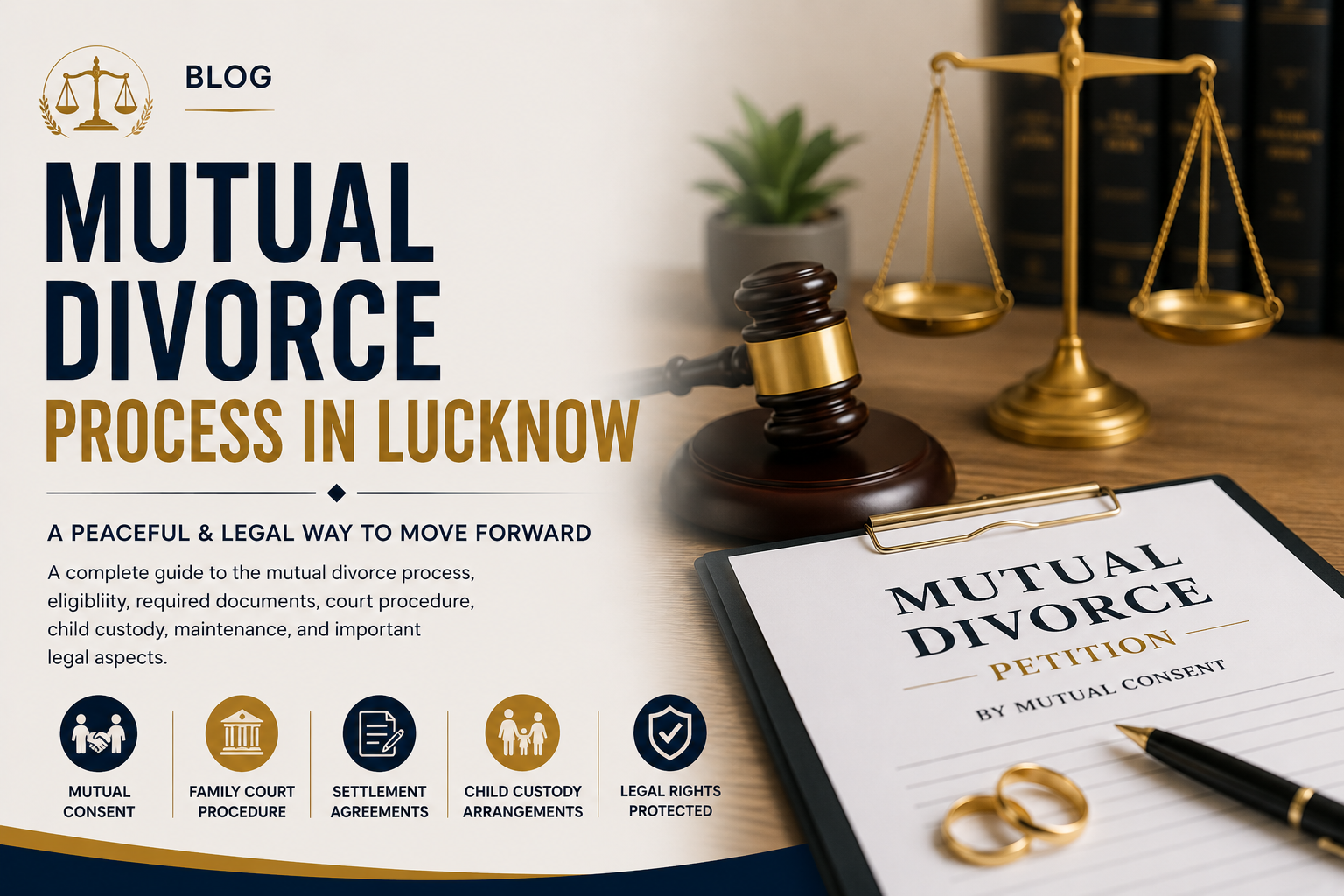
Mutual Divorce is one of the most practical and peaceful ways for a husband and wife to legally dissolve their marriage when both parties agree that they can no longer continue their marital relationship. Compared to contested divorce proceedings, mutual divorce is generally less stressful, more cost-effective and involves fewer court appearances.
As a Family Court Lawyer practicing in Lucknow since 2007, Advocate Anurag Arora regularly assists couples in navigating the mutual divorce process while ensuring that their legal rights and interests remain protected throughout the proceedings.
What is Mutual Divorce?
Mutual Divorce is a legal process where both spouses jointly agree to end their marriage and settle important issues such as child custody, visitation rights, maintenance, alimony, property division and financial responsibilities through mutual consent.
Under Indian law, mutual divorce petitions are generally filed before the Family Court having jurisdiction over the matter.
Eligibility for Mutual Divorce
Couples may seek mutual divorce when:
- Both spouses agree to dissolve the marriage.
- They have been living separately.
- There is no possibility of reconciliation.
- Issues relating to maintenance, alimony and custody have been mutually settled.
- Both parties voluntarily consent to the divorce.
Step-by-Step Mutual Divorce Process in Lucknow
Step 1 – Legal Consultation
The process begins with a consultation where both parties discuss their situation and settlement terms with an experienced Mutual Divorce Lawyer.
Step 2 – Drafting of Joint Petition
A joint divorce petition is prepared detailing:
- Marriage details
- Period of separation
- Settlement terms
- Child custody arrangements
- Maintenance and alimony settlement
- Property settlement details
Step 3 – Filing Before Family Court
The petition is filed before the Family Court in Lucknow along with supporting documents and affidavits.
Step 4 – First Motion Statement
Both parties appear before the Family Court and record their statements confirming their intention to seek mutual divorce.
Step 5 – Settlement Verification
The Court verifies that all settlement terms relating to maintenance, child custody and financial obligations have been voluntarily agreed upon.
Step 6 – Final Motion
Upon completion of legal formalities and satisfaction of the court, the parties appear for the final motion and confirm their consent.
Step 7 – Divorce Decree
After considering the statements and documents, the Family Court passes a decree of divorce legally dissolving the marriage.
Documents Required for Mutual Divorce
- Marriage Certificate (if available)
- Aadhaar Card of Husband and Wife
- PAN Card
- Passport Size Photographs
- Address Proof
- Marriage Photographs
- Income Documents
- Settlement Agreement
- Child Custody Agreement (if applicable)
Child Custody in Mutual Divorce
One of the most important aspects of mutual divorce is deciding the future welfare of the child. Parents may mutually agree regarding:
- Sole Custody
- Joint Custody
- Visitation Rights
- Educational Expenses
- Medical Expenses
- Future Financial Responsibilities
Advantages of Mutual Divorce
- Less stressful process.
- Reduced legal expenses.
- Fewer court appearances.
- Faster resolution.
- Privacy and dignity for both parties.
- Better child welfare arrangements.
Why Choose Advocate Anurag Arora?
Advocate Anurag Arora has been practicing before Family Courts and various judicial forums since 2007 and provides comprehensive legal assistance in Mutual Divorce, Child Custody, Maintenance, Alimony and Family Court matters in Lucknow.
From drafting petitions and settlement agreements to court representation and final decree proceedings, complete legal support is provided to ensure a smooth and legally compliant divorce process.
Contact Advocate Anurag Arora for professional guidance regarding Mutual Divorce, Child Custody, Maintenance, Alimony and Family Court Litigation in Lucknow.
📞 +91 77540 22196